EU Sustainability Reporting After the Omnibus Vote: Mapping Recent Positions
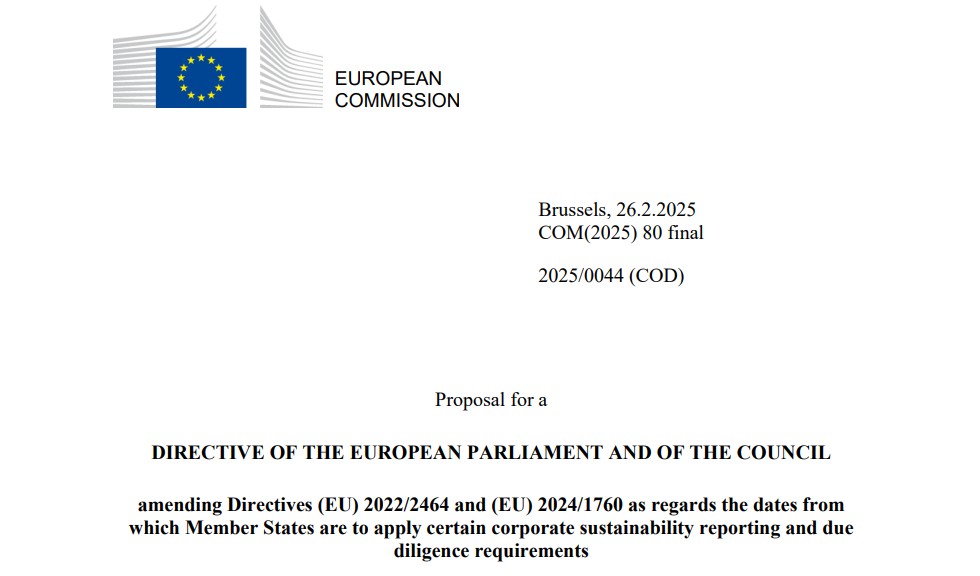
As the European Union reviews elements of its sustainability framework, the Omnibus I package has become a key reference point for discussions on the future of corporate reporting and due diligence. The proposal has prompted a range of institutional, political and civil society responses that highlight different views on how to balance simplification with effective transparency and accountability. This article summarises several of the main positions.
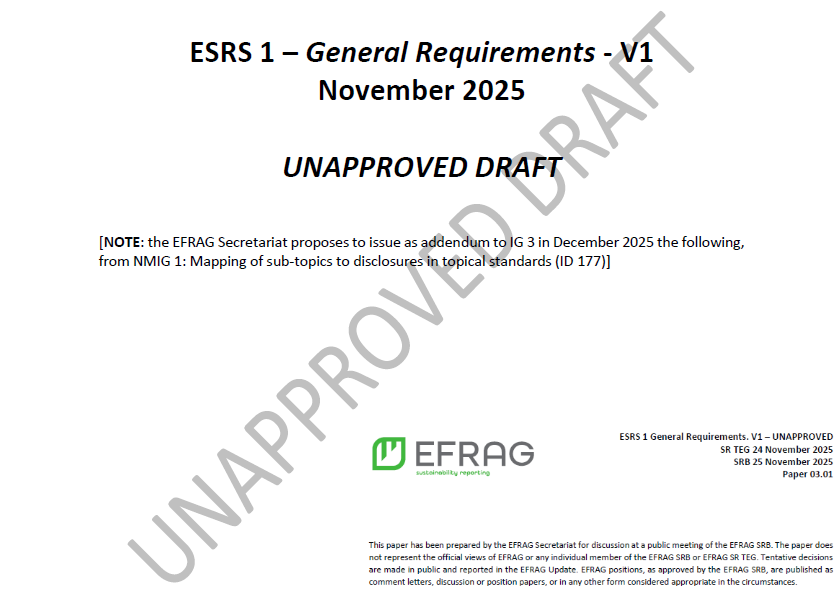
On 13 November the European Parliament adopted its negotiating position on the package known as the Omnibus I, with a majority of votes. Under the proposed amendments, mandatory social, environmental and taxonomy related reporting would apply only to companies with more than 1,750 employees and an annual net turnover above €450 million. Reporting standards would be simplified, with reduced qualitative detail, voluntary sector-specific reporting and limits on the additional information that large companies may request from smaller business partners beyond the voluntary standard.
Due diligence duties would be restricted to very large corporations with more than 5,000 employees and at least €1.5 billion in turnover. These companies would follow a risk-based approach and would no longer be required to prepare a transition plan to align their business model with the Paris Agreement. Liability for breaches would be handled at national level and a new digital portal is envisaged to help companies understand EU reporting obligations.
In the draft agenda for the Strasbourg part session of 15 to 18 December 2025, the item Certain corporate sustainability reporting and due diligence requirements, with Jörgen Warborn as rapporteur for the JURI committee, is scheduled for a vote on 16 December, indicating that the Omnibus I package remains high on Parliament’s legislative agenda.
Institutional Oversight and Procedure
Following the vote, the European Ombudsman published the results of an inquiry into how the European Commission handled the urgent legislative files that underpin the Omnibus proposal. The Ombudsman identified shortcomings related to transparency, documentation and the justification for using accelerated procedures. These findings have drawn attention to the way in which significant changes to sustainability reporting and due diligence rules were prepared and have prompted questions about procedural safeguards in fast-tracked law-making.
A detailed explanation by a specialist disclosure organisation underlined that such procedural issues can influence confidence in the final framework. When reforms affect both market transparency and corporate accountability, the quality of the process is regarded as part of the credibility of the outcome.
Political and Strategic Perspectives Within the EU
Within the Parliament, Jörgen Warborn, the lead negotiator on the Omnibus I, presented the amendments as a necessary adjustment to ease regulatory pressure on businesses. In his public statement he linked simplified obligations with support for competitiveness, investment and job creation, arguing that extensive reporting requirements can hold companies back when global competition is intense. Supporters of this approach see the higher thresholds and simplified standards as a way to focus mandatory reporting on the largest actors and to avoid disproportionate administrative costs for smaller firms.
At the same time, Teresa Ribera, an executive vice president of the European Commission responsible for a clean, just and competitive transition, has stressed the importance of maintaining reliable, high-quality and comparable sustainability information as a basis for long-term competitiveness and economic sovereignty. In her view, moving away from robust reporting and traceability could weaken Europe’s position in global sustainable finance, increase financing costs for companies and reduce access to sustainable capital. She argues that Europe should continue to act as a rule-maker, retaining the ability to shape its own standards while ensuring compatibility with international norms, and that simplification should not mean giving up transparency, reliability or diligence.
Human Rights and Civil Society Views
The European Network of National Human Rights Institutions (ENNHRI) has issued a statement on the Omnibus negotiations calling for a broad scope of corporate responsibility. ENNHRI argues that narrowing the thresholds for sustainability reporting and due diligence may exclude many companies from meaningful scrutiny and weaken the overall protection of human rights across global value chains. The network emphasises that reporting and due diligence obligations are tools to identify and address negative impacts on people and the environment and urges legislators to preserve this function.
The United Nations High Commissioner for Human Rights, Volker Türk, has similarly emphasised that revised EU corporate sustainability rules must remain aligned with key human rights principles and continue to make sense for people and planet. He expressed concern that proposals under consideration could undermine the effectiveness, enforceability and integrity of the Corporate Sustainability Due Diligence Directive (CSDDD) by restricting companies’ ability to identify human rights risks across their global value chains. He stressed that the Directive should retain a risk-based approach consistent with the UN Guiding Principles on Business and Human Rights to avoid forcing companies to operate parallel due diligence systems and to prevent additional costs and complexity that could arise from diverging standards.
Standard Setting and Implications for Practice
The Global Reporting Initiative (GRI) has responded to the Parliament vote by expressing concern that the proposed changes could be viewed as a step back for EU leadership in sustainability reporting. GRI points to the role of comprehensive and comparable disclosures in enabling stakeholders to understand impacts and performance and notes that a narrower mandatory scope could weaken the influence of the EU on global reporting practice.
Taken together, these reactions illustrate a tension between the objective of reducing administrative burdens and the aim of maintaining robust disclosure and accountability mechanisms. For organisations and professionals working with non-financial reporting, the outcome of the trilogue negotiations on the Omnibus I package will be important. The final choices on scope, level of detail and supporting tools are likely to shape both compliance efforts and the extent to which sustainability information continues to support market confidence, risk assessment and broader societal expectations in the European context.